Geries Shaheen • May 13, 2017

Caverns & Forests: Hunting Ourselves

For those who are in the practice of counseling, there exists an entire world of theory, technique, method, and belief. One of which, CBT (cognitive behavioral therapy), builds on the notion that dysfunctional thinking (thinking which causes the individual to not function in the manner they perceive to be meaningful or effective) can be restructured by focusing on the beliefs behind one's own cognition. This cognition, or thought patterns based on beliefs , could have been placed or instituted by the enironment, family, peers, history, books, etc. The power behind cognition, however, is fueled by the self.


The name Friedrich Nietzsche is often despised by Christian circles, and oppositely praised by those without a focus in Christ-centered approaches or practice. But hear his words on the matter of self in regard to cognition:


“But the worst enemy you can meet will always be yourself; you lie in wait for yourself in caverns and forests. Lonely one, you are going the way to yourself! And your way goes past yourself, and past your seven devils! You will be a heretic to yourself and witch and soothsayer and fool and doubter and unholy one and villain. You must be ready to burn yourself in your own flame: how could you become new, if you had not first become ashes?”

-Friedrich Nietzsche

I find these examples of waiting in caverns and forests to be evident in my own life, and find it hard to believe others if they attest against their own skeletons, rather than accept them. However there is another way to express what Nietzsche is saying. Process these words in the book of James:

“Each person is tempted when he is lured and enticed by his own desire. Then desire when it has conceived gives birth to sin, and sin when it is fully grown brings forth death.”

-James 1:14–15

Through these words there is a focus on self: desire, lure, temptation, specifically one that we create in our own minds. This scripture is possessive, ironically reflecting its truth and its consequence at the same time.

These two references do offer a stark challenge , one states you will undoubtedly burn yourself and rise from your own self (ashes) to be a new person, having learned from your past, while the other offers an option to accept the call of Jesus and rise from the symbolic and life-altering waters that grant a new life and new perspective.

It would be reasonable to say that as the venture of listening to clients sit with their self cognition as it progresses, being empathetic is important, but does not limit one's clarity in expressing disagreement based on client-centered distorted thinking.

With this in mind, "I don't agree with what you're thinking/doing," seems only respectable once validation is firmly grounded and expressed. Perhaps that is when discussion of said 'faulty ideas' would be appreciated and effective.

The long list of reasoning behind blockading one's ability to change, or to even think about change, often times revolves around a specific factor:

- Fear of change

- Fear of disappointment

- Fear of people validating one's worst thoughts.

- Fear of having to confront abusers

- Fear of taking responsibility

Were you able to find the specific factor?

Fear . All of the examples listed above create resistance, and cause us to forget what I, personally, believe is an ultimate truth, that "Fear of man will prove to be a snare, but whoever trusts in the Lord is kept safe" (Proverbs 29:25).

In holding our thoughts captive , we intersect fear. It keeps us from turning the page, moving on, starting a new chapter in our lives. I leave you with no challenge, no charter, so that you may navigate through your own thoughts, draw your own maps, and excavate new discoveries! Let me know how it goes.


Geries Shaheen is a Provisionally Licensed Professional Counselor operating in and around St. Louis Missouri. Geries teaches psych classes as an Adjunct at Saint Louis Christian College and offers Adolescent/ Family Therapy through Preferred Family Healthcare . Geries holds his BA in Intercultural Studies from Lincoln Christian University, and his MA in Professional Counseling from Lindenwood University. Holding a certificate in Life Coaching, Geries provides life coaching services to clients online throughout the nation.

Pioneer Counseling Blog

By Geries Shaheen August 11, 2026
Conversations about DSM-6 are growing louder in professional spaces . Industry leaders, researchers, and clinicians are sharing insights about what the next revision of the Diagnostic and Statistical Manual of Mental Disorders may look like. Some projections suggest a potential release window around 2029 to 2030 , though the American Psychiatric Association has not formally confirmed a publication date. For Licensed Professional Counselors, it is important to distinguish between confirmed information and thoughtful speculation. What follows is a grounded overview of both.  What Is Officially Confirmed There has been talks of the next DSM potentially being names something totally different, as well as potentially being a living breathing document housed online rather than a printed material. This has led to thoughts that it will include a full structural overhaul as it aims to find a balance between psychiatric insight as well as lived experience data. At the moment, there has been no official announcement of: A finalized DSM-6 release date A confirmed structural overhaul A change in name Adoption of biomarkers as diagnostic requirements The APA has historically used multi-year committee processes for revision, as documented during the development of DSM-5 (Regier et al., 2013, American Journal of Psychiatry). Any specific timeline, including projections of 2029 to 2030, remains speculative unless formally announced by the APA. Documented Criticisms of the DSM Many of the concerns you listed are well documented in peer-reviewed literature, including in the American Journal of Psychiatry. Historically cited critiques include: • The DSM uses a categorical model, which may not fully capture dimensional or nuanced symptom presentations. • Emphasis on diagnostic reliability has sometimes been prioritized over diagnostic validity. • Limited integration of biological markers despite advances in neuroscience. • Heavy reliance on expert consensus panels. • Concerns about Western cultural bias in diagnostic framing. These critiques have appeared in academic discussions surrounding DSM-5 and broader psychiatric nosology debates (Hyman, 2010; Regier et al., 2013). What is important to note is that these criticisms are part of ongoing scholarly dialogue. They do not automatically predict specific DSM-6 changes. Themes Being Discussed in Professional Circles While not formally confirmed, several themes are widely discussed among researchers and leaders: 1. Greater Dimensional Integration DSM-5 already introduced cross-cutting symptom measures and severity scales. Continued movement toward dimensional models is supported in academic literature (Krueger & Markon, 2014). A future DSM may further integrate dimensional frameworks alongside categorical diagnoses. 2. Stronger Alignment with ICD There has been ongoing effort to harmonize DSM diagnostic codes with the International Classification of Diseases, maintained by the World Health Organization. Future revisions may continue this integration to improve global diagnostic consistency. 3. Inclusion of Biomarkers Despite significant neuroscience research, no current psychiatric diagnosis relies on validated biomarkers. The National Institute of Mental Health developed the Research Domain Criteria (RDoC) framework to explore biologically informed models. However, RDoC remains a research framework and is not a diagnostic manual. Any integration of biomarkers into DSM-6 would require strong empirical validation, and no official confirmation currently exists that biomarkers will be required for diagnosis. 4. Cultural and Social Determinants DSM-5-TR expanded cultural formulation tools and updated language related to gender and diversity. Ongoing discourse suggests future editions may further incorporate cultural, socioeconomic, and environmental determinants of mental health. 5. Lived Experience Input There is broader movement in healthcare toward incorporating lived experience perspectives. While stakeholder feedback has been part of past revisions, there has been no formal announcement detailing the extent of lived experience integration for DSM-6. The direction of greater inclusivity aligns with contemporary healthcare standards but remains under development. Autism and Potential Diagnostic Shifts Speculation regarding updates to Autism Spectrum Disorder criteria reflects ongoing research around gender differences, masking, and underdiagnosis in women and people of color. Research literature supports the idea that autism presentations may differ across populations. However, there is currently no official confirmation that DSM-6 criteria changes will create a diagnostic surge. Any future criteria updates would require field trials and empirical validation before implementation. Committee Structures The APA historically forms workgroups and task forces organized by diagnostic categories and thematic areas. Planned improvement committees include the "Structure and Dimensions committee", "Functioning and Quality of life committee" "Biomarkers and Biological factors committee" " Socioeconomic, cultural, and environmental determinants of mental health committee". What LPCs Should Do Now Continue practicing under DSM-5-TR standards. Strengthen dimensional assessment skills and measurement-based care. Stay informed through official APA channels and peer-reviewed publications. Approach social media claims with professional caution. :) It is reasonable to expect that DSM-6 will aim to reflect scientific advances, cultural responsiveness, and improved diagnostic validity. However, until the American Psychiatric Association releases formal statements, timelines, or draft criteria, any detailed structural predictions remain speculative. For Licensed Professional Counselors, preparation is less about anticipating dramatic changes and more about maintaining strong assessment practices, cultural competence, and evidence-based treatment planning. Geries Shaheen is a Licensed Professional Counselor and Nationally Certified Counselor operating in and around St. Louis Missouri. Geries holds his MA in Professional Counseling from Lindenwood University, BA in Intercultural Studies from Lincoln Christian University, and holds a certificate in Life Coaching, Geries provides life coaching services to clients online globally. Geries is EMDR trained and DBT Certified, practicing from a TIC lens.
By Geries Shaheen August 11, 2026
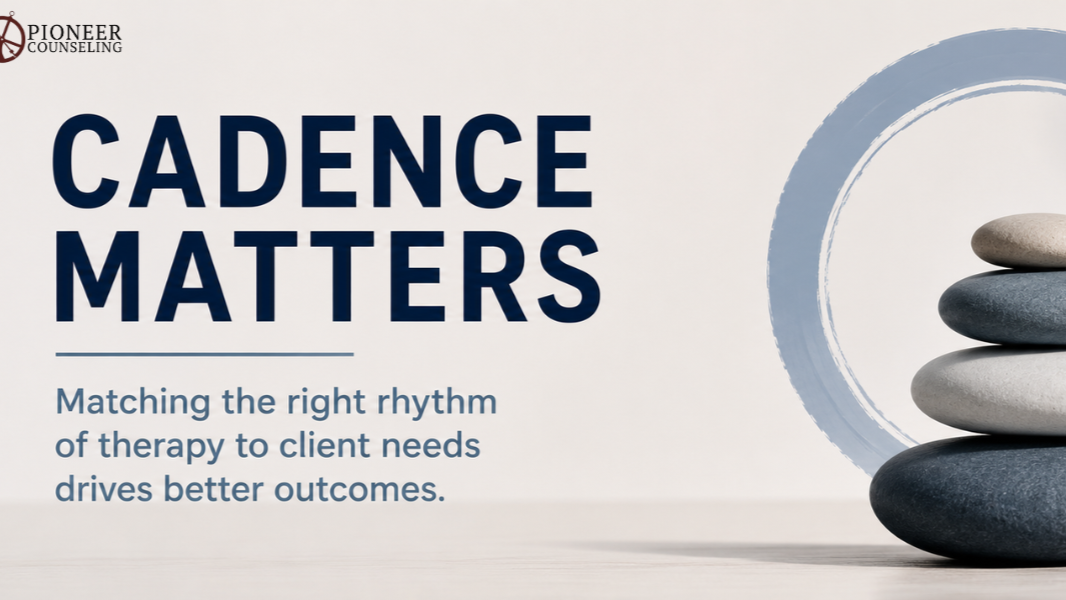
In behavioral health, we spend a significant amount of time discussing medical necessity. We complete assessments, symptom inventories, risk scales, progress reviews, treatment plans, and utilization documentation designed to justify levels of care to payors, agencies, and federal grant programs. Those systems are important. Accountability matters. Evidence-based care is crucial. But there is another clinical variable that often determines outcomes more than any assessment score alone: Cadence. The frequency and consistency of therapy can profoundly impact stabilization, insight development, emotional regulation, therapeutic alliance, and long-term outcomes. Yet cadence is often treated as an operational scheduling issue instead of a clinical intervention in itself. The reality is that not all clients need the same rhythm of care. Some clients benefit from: Daily therapy for intense instances. Twice-weekly sessions during periods of crisis stabilization or acute symptom escalation Weekly therapy for active trauma processing, emotional regulation development, or skill acquisition Biweekly sessions during maintenance phases Monthly sessions for relapse prevention, accountability, and long-term support after sustained improvement Research increasingly supports what many clinicians already observe in practice: matching cadence to client need improves outcomes. A 2024 meta-analysis published in the Journal of Affective Disorders found that increasing psychotherapy frequency from one session per week to two sessions per week was associated with significantly stronger treatment outcomes for depression, particularly during the acute phase of treatment. Researchers noted that session frequency appeared to matter more than total treatment duration alone. ( https://www.sciencedirect.com/science/article/pii/S0165032724008061? ) Additional longitudinal research comparing weekly and biweekly therapy found that clients receiving weekly therapy demonstrated higher rates of early improvement and shorter durations of suffering compared to biweekly treatment schedules. The study also emphasized that therapy frequency should be individualized because client response trajectories vary considerably. ( https://pubmed.ncbi.nlm.nih.gov/37870790/ ) This aligns with what clinicians see every day: Clients in early trauma work often need tighter therapeutic containment Clients learning emotional regulation benefit from repetition and proximity Clients with attachment disruptions frequently require consistency before depth Clients in relapse recovery may need increased contact before symptom escalation becomes visible in formal assessments Therapy does not occur only during the 53-minute session. It unfolds between sessions , in how quickly a client can reconnect after dysregulation, revisit a cognitive distortion before it hardens into avoidance, process a triggering event while it remains emotionally accessible, or practice a coping strategy before disengagement returns. The interval between sessions can either sustain therapeutic momentum or unintentionally interrupt it. This is where the tension between clinical reality and administrative structure often emerges. Many large agencies rely heavily on standardized assessments and federally guided documentation frameworks to determine treatment frequency and level of care recommendations. These tools create accountability, consistency, and measurable outcomes across systems. As they should, but Measurement-based care has become increasingly important in behavioral health. Some recent findings suggest that structured measurement-informed care can improve patient outcomes by as much as 24%, while psychiatric treatment incorporating routine symptom monitoring has shown remission rates up to 75% higher than treatment without ongoing measurement practices. (https://www.twochairs.com/blog/two-chairs-publishes-first-of-its-kind-study-showing-measurement-based-care-training-improves-outcomes-by-24-at-scale) Thus, assessments are snapshots. Cadence is relational. An assessment may capture symptom severity at a single point in time. Cadence captures the pace of support a client clinically requires to sustain progress between those moments. Two clients can present with similar PHQ-9 or GAD-7 scores yet require entirely different treatment frequencies based on: emotional regulation capacity environmental stressors trauma acuity relapse history attachment dynamics coping skill generalization safety concerns psychosocial support systems Strong clinical work requires balancing measurable data with clinical judgment . (and often, clinical judgment comes from building clinician autonomy).( https://www.psychiatrictimes.com/view/measurement-based-care-in-psychiatry-clinical-outcomes-and-practical-applications ) Sometimes the most important question is not: “Can we justify this frequency to insurance?” Sometimes the more important question is: “What cadence gives this client the best opportunity to succeed?” Approximately 50% of clients discontinue therapy prematurely, with poor therapeutic fit, inconsistent engagement, and treatment structure often contributing factors. ( https://www.ncbi.nlm.nih.gov/pmc/articles/PMC5600065/ ) As mental health systems continue evolving toward outcome-driven care, there is an opportunity to broaden how we define treatment effectiveness. Frequency of contact, continuity, relational consistency, and therapeutic pacing deserve greater recognition as active components of care. Otherwise they will be thrown to the wayside as mere operational details. In our industry, timing truly matters. And cadence is part of the treatment itself.  Geries Shaheen is a Licensed Professional Counselor and Nationally Certified Counselor operating in and around St. Louis Missouri. Geries holds his MA in Professional Counseling from Lindenwood University, BA in Intercultural Studies from Lincoln Christian University, and holds a certificate in Life Coaching, Geries provides life coaching services to clients online globally. Geries is EMDR trained and DBT Certified, practicing from a TIC lens.
More Posts