Geries Shaheen • April 23, 2022

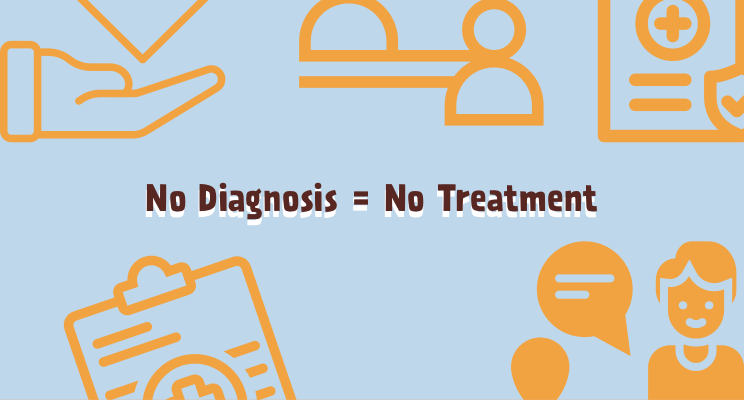
No Diagnosis = No Treatment
When I began developing my clinical framework and structure of care in my private practice I seriously explored my options. I looked around the industry and asked for wisdom from professors, peers, experienced and seasoned therapists. I had to decide if I would accept insurance to cover the cost /partial cost of services.

At face value I’m sure most therapists would say yes.

There are many agencies that are/were funded by grants, donations, and insurances. I felt conflicted for various reasons. I wanted care to be tied to client needs, not client financial status.

I have heard of financial based structures that suited socioeconomic placement rather than need. Agencies that would place referrals with interns or plpc’s based on how much a client can pay/ cover rather than determining placement on client level of need. If an individual called and said they can only afford x amount - they would be placed with a counselor/ therapist willing to accept that bracket. I wasn’t sure I fit that model.

I also felt conflicted with the amount of client information that was/is required by insurances to have sessions covered, asking for a diagnosis, attendance, even in some situations ongoing in depth reviews on level of care. This felt intrusive.

I eventually made the decision to have a sliding fee scale based on affordability of the client, I also created a non-profit arm of my practice to cover session costs for those unable to pay. I wanted care to be first, then a discussion of finance. I found in the most recent season of my practice that this type of engagement is 10x more fruitful than having an ongoing rotation of insurance based clients.

“What about clients that WANT to use insurance? Do you decline them?”

Not at all. For clients who wish to use their insurance, I inform them of what insurances request, most decide against it. For those that choose to continue, I provide a superbill and the steps necessary to submit.

Running this type of practice is not for the faint of heart. It is also not for those who wish to make loads of money quickly. There are practices that charge upwards or $300 per session and manage a lucrative business. Then there are practices that focus on the “affordable” aspect of a negotiable sliding fee scale.

I’ve had peers nationwide throw stones at this concept, indicating that I am bringing shame to therapists that “have to make a living”, and thus justifying their well oiled machines. I don’t feel bad about my framework, nor do I claim to push my agenda on anyone else. Instead I praise them for finding their niche!

Each practice is going to have its own framework , structure and philosophy. I spend hours / years providing supervision and consultation to those building their practices and careers. I don’t have the ability to tell them exactly how to create their practice, instead I encourage them to explore their options as I did. I praise them when they find their groove.

Existing in this industry for 10 years , and the non profit world for 15, I can assure you its not going to always look the same. Your practice will ever evolve, and your perspective will change. Leaning on ethics / state statuettes/ Regulations is always helpful. Having a Pioneering and innovative spirit helps as well.

How have you built your practice? What are you boundaries to care? Have you had to be creative in managing your practice?

If you are developing your practice and are looking for guidance, feel free to reach out. pioneercounselingstl@gmail.com

Geries Shaheen is a Licensed Professional Counselor and Nationally Certified Counselor operating in and around St. Louis Missouri. Geries holds his MA in Professional Counseling from Lindenwood University, BA in Intercultural Studies from Lincoln Christian University, and holds a certificate in Life Coaching, Geries provides life coaching services to clients online globally.

Pioneer Counseling Blog

By Geries Shaheen January 3, 2026
January invites reflection. In 2026, whether you’re a clinician supporting others or a client investing in your own healing, one truth remains constant: change is inevitable—but growth is intentional. The way we engage with change shapes outcomes more than the change itself. While mental health frameworks, technologies, and conversations continue to evolve, the core of healing remains deeply human—rooted in connection, meaning, and courage. The Bigger Picture: A Need That’s Real, and Hopeful Mental health challenges are widespread, yet the story does not end there. Globally, over 1 billion people live with a mental health condition. In the United States, nearly 1 in 4 adults experienced a mental health concern in the past year. At the same time, recent data shows improvements in youth mental health, including reductions in major depressive episodes and suicidal ideation. These numbers tell a dual story: the need is significant, and progress is possible. For Clinicians: Where Science Meets Presence We practice at the intersection of evidence and empathy. Recent trends show that more than half of adults with mental health conditions are now receiving treatment, and nearly 70% of individuals with serious mental illness are accessing care. Additionally, close to nine out of ten people who engage in therapy report meaningful improvements in their lives. What this reinforces in 2026: Evidence-based modalities matter, but how they are delivered matters just as much. Emotional safety is not optional; it is foundational. Small, often quiet gains are still powerful indicators of change. Progress does not always look dramatic. Sometimes it looks like a client naming an emotion more clearly, setting a boundary, or returning after a difficult week. These moments count. For Clients: Your Healing Is Not a Performance If you are in therapy, or considering it, these truths are worth holding onto this year: You are not behind. Healing has no universal timeline. Your voice matters. Therapy works best when your values and lived experience shape the process. Progress is rarely linear. Growth often includes pauses, detours, and revisiting old ground with new insight. Therapy is not about becoming a different person. It is about becoming more fully yourself. The data supports this: the vast majority of people who engage in counseling report improvements in confidence, emotional regulation, and overall well-being. A Shared Journey Forward Clinicians and clients are not on opposite sides of the work, we are collaborators in a shared human process. Hope in 2026 is not blind optimism. It is grounded in effort, connection, and skill-building. It shows up in sessions that feel hard but honest, in moments of insight that arrive quietly, and in the courage to keep showing up. As this year unfolds, may healing feel attainable, growth feel sustainable, and change feel less overwhelming. One intentional step at a time. Geries Shaheen is a Licensed Professional Counselor and Nationally Certified Counselor operating in and around St. Louis Missouri. Geries holds his MA in Professional Counseling from Lindenwood University, BA in Intercultural Studies from Lincoln Christian University, and holds a certificate in Life Coaching, Geries provides life coaching services to clients online globally. Geries is EMDR trained and DBT Certified, practicing from a TIC lens.
By Geries Shaheen March 25, 2023
Dialectical Behavior Therapy (DBT) was developed by psychologist Marsha Linehan in the 1980s to treat individuals with borderline personality disorder (BPD). DBT combines cognitive-behavioral therapy (CBT) with mindfulness and emphasizes acceptance and validation of intense emotions. It involves weekly individual and group therapy sessions, where individuals learn specific skills related to mindfulness, distress tolerance, emotion regulation, and interpersonal effectiveness. DBT has since been adapted to treat a range of mental health conditions and is recognized as an evidence-based treatment. DBT has been proven effective in treating a wide range of mental health conditions, including borderline personality disorder, substance abuse, and eating disorders. One of the key components of DBT is the use of specific protocols to address common issues that clients may experience. One of these protocols is the DBT Nightmare Protocol, which is designed to help individuals who are experiencing recurring nightmares. Nightmares are a common experience for many people, and they can be particularly distressing for individuals who have experienced trauma. In fact, nightmares are a symptom of post-traumatic stress disorder (PTSD), and they can be a significant barrier to healing for individuals who are struggling with this condition. The DBT Nightmare Protocol was developed to help these individuals manage their nightmares and reduce their overall distress. The DBT Nightmare Protocol is a 10-week protocol that is designed to help individuals learn to manage their nightmares through a combination of behavioral strategies and cognitive techniques. The protocol is typically conducted in a group setting, although it can also be done on an individual basis. The following is an overview of the different components of the DBT Nightmare Protocol. Week 1: Psychoeducation The first week of the DBT Nightmare Protocol is dedicated to psychoeducation. During this week, the therapist will provide information about nightmares and the impact they can have on mental health. Clients will also learn about the common triggers for nightmares and the different ways in which nightmares can be managed. Week 2: Sleep Hygiene During the second week of the DBT Nightmare Protocol, clients will learn about sleep hygiene. This includes information about the importance of getting enough sleep, as well as strategies for improving sleep quality. Clients will also learn about the relationship between sleep and nightmares, and they will be provided with specific strategies for reducing the frequency and intensity of their nightmares. Week 3: Imagery Rehearsal Therapy Imagery rehearsal therapy (IRT) is a technique that is commonly used to treat nightmares. During the third week of the DBT Nightmare Protocol, clients will learn about IRT and how it can be used to reduce the frequency and intensity of nightmares. Clients will also have the opportunity to practice IRT techniques with the guidance of their therapist. In IRT, your therapist first provides you with background information on sleep and nightmares to "set the scene" for learning to manage them. Then, working with your therapist, you create detailed, nonfrightening endings for nightmares you've had repeatedly. Write down and rehearse the nightmares with the new endings. Learn how to monitor your nightmares so you know how well your IRT treatment is working. The goal is to "reprogram" your nightmares to be less terrifying if and when they occur again. Week 4: Mindfulness Mindfulness is a key component of DBT, and it can be particularly helpful for individuals who are experiencing nightmares. During the fourth week of the DBT Nightmare Protocol, clients will learn about mindfulness and how it can be used to manage anxiety and other symptoms associated with nightmares. Week 5: Progressive Muscle Relaxation Progressive muscle relaxation (PMR) is a relaxation technique that involves tensing and then relaxing different muscle groups in the body. This technique can be particularly helpful for individuals who are experiencing nightmares. During the fifth week of the DBT Nightmare Protocol, clients will learn about PMR and how it can be used to reduce the intensity of nightmares. Week 6: Cognitive Restructuring Cognitive restructuring is a technique that is used to challenge negative thought patterns and beliefs. During the sixth week of the DBT Nightmare Protocol, clients will learn about cognitive restructuring and how it can be used to challenge negative beliefs and thoughts that contribute to nightmares. People sometimes experience distorted thinking. Thought patterns that create an unhealthy perspective of reality. Cognitive distortions often lead to depression, anxiety, relationship problems, and self-defeating behaviors. Examples of cognitive distortions include: black-and-white thinking catastrophizing overgeneralizing personalizing Cognitive restructuring allows you to notice these maladaptive thoughts as they’re occurring. And then practice reframing these thoughts in more accurate ways. During this step, you will question your assumptions, gather evidence by self-monitoring on a daily basis, and perform cost-benefit various analyses. If you can change how you look at certain events or circumstances, your feelings and the actions you take may also change. Week 7: Graded Exposure Graded exposure is a technique that involves gradually exposing oneself to a feared situation or object. During the seventh week of the DBT Nightmare Protocol, clients will learn about graded exposure and how it can be used to reduce the fear associated with nightmares. Week 8: Relaxation Training Relaxation training is a technique that involves teaching individuals to relax their bodies and minds. During the eighth week of the DBT Nightmare Protocol, clients will learn about relaxation training and how it can be used to reduce anxiety and other symptoms associated with nightmares. Clients will also have the opportunity to practice relaxation techniques with the guidance of their therapist. Week 9: Self-Compassion Self-compassion is an important component of DBT, and it can be particularly helpful for individuals who have experienced trauma. During the ninth week of the DBT Nightmare Protocol, clients will learn about self-compassion and how it can be used to reduce self-criticism and self-blame associated with nightmares. Week 10: Relapse Prevention The final week of the DBT Nightmare Protocol is focused on relapse prevention. During this week, clients will learn about the different strategies they can use to maintain the progress they have made in managing their nightmares. They will also be encouraged to develop a plan for how they will continue to manage their nightmares after the end of the protocol. The DBT Nightmare Protocol is a comprehensive and effective approach to managing nightmares. By incorporating a range of behavioral and cognitive strategies, clients are able to learn the skills they need to reduce the frequency and intensity of their nightmares. If you are experiencing nightmares, it may be helpful to speak with a mental health professional who is trained in DBT to see if the DBT Nightmare Protocol is right for you. Unsure about adapting DBT into your framework? -A randomized controlled trial of DBT for suicidal and self-injuring individuals with BPD found that DBT was more effective than treatment as usual in reducing suicidal and self-injurious behaviors (Linehan et al., 2006). -A meta-analysis of 11 randomized controlled trials of DBT for individuals with BPD found that DBT was effective in reducing suicidal and self-injurious behaviors, as well as other symptoms of BPD, such as depression and anxiety (Kliem et al., 2010). -A randomized controlled trial of DBT for individuals with binge eating disorder found that DBT was more effective than treatment as usual in reducing binge eating and improving eating disorder-related attitudes and behaviors (Safer et al., 2010). -A review of 17 studies of DBT for individuals with substance use disorders found that DBT was effective in reducing substance use and improving overall functioning (Linehan et al., 2002). Overall, research suggests that DBT is an effective treatment for a range of mental health conditions, including BPD, eating disorders, substance use disorders, and post-traumatic stress disorder (PTSD). It is worth noting that the effectiveness of DBT can vary depending on individual factors, such as the severity of symptoms and the level of treatment adherence. Perhaps you are a private practice in the mental health industry, or maybe a large agency trying to get your clinicians on the same page regarding Trauma Informed Care. Consider the Pioneer Counseling Trauma Informed Care Psychotherapy Tx Planner. It really is more than a tx planner, it is a guide and a point of reference. https://www.amazon.com/dp/B0BQ9FWFMT?ref_=cm_sw_r_cp_ud_dp_0MKBDBQ5PRD8G8NBEJ0B No alt text provided for this image Geries Shaheen is a Licensed Professional Counselor and Nationally Certified Counselor operating in and around St. Louis Missouri. Geries holds his MA in Professional Counseling from Lindenwood University, BA in Intercultural Studies from Lincoln Christian University, and holds a certificate in Life Coaching, Geries provides life coaching services to clients online globally. Geries is EMDR trained and DBT Certified, practicing from a Trauma Informed Care lens.e body content of your post goes here. To edit this text, click on it and delete this default text and start typing your own or paste your own from a different source.
More Posts